Saturday, 25 February 2023

Trip to Rutland, Suffolk and Norfolk (Part Two)

 Day Four.  We weren’t out quite as soon as yesterday morning, but considering it was Sunday we still had an early breakfast and were soon down on the shingle spit south of the town of Aldeburgh and walking along towards the Martello Tower at Slaughden and overlooking the  snake like River Alde.  Benjamin Britten’s Curlew River.  Yes, there are still Curlews present feeding, but probably far fewer than in Britten’s time.  Other waders too such as Redshank, Oystercatcher, Dunlin and Turnstone.  Little Egrets were about and we found Rock Pipit.  We were down there lapping up the quiet atmosphere long before most Sunday walkers were about.  As the morning went on we could hear the Rooks from a rather large rookery across the other side of the marsh and also the church bells from Aldeburgh town.  We had earlier talked of the loss of so many rookeries over the years.

Early morning at The River Alde

Slaughden Village was lost to the sea, but the impressive Martello Tower still stands and is now used for holiday accommodation.  It was built in 1810/12 as protection against Napoleonic invasion.  The narrow spit south of the tower leads to Orford Ness N N Reserve which is closed in winter, but in any case that particular pathway is closed to the public.  Unexploded ordnance I believe.

The Martello Tower

Having enjoyed the peaceful atmosphere of the River Alde area and our early morning walk we made off to the reed-beds and wetland at North Warren slightly north of Aldeburgh.  After a short walk, our big reward was the flocks of White Fronted Geese showing wonderfully well.  These birds always look to me as though someone has taken a paint brush to their bellies.  I know this is Sam’s favourite goose species.  The wetland held numerous waterfowl, but it was the whistling Wigeon which made themselves so evident.  Avocets were present.   As well as the star attraction, the White Fronted Geese, other geese seen today were Pink Footed Geese, Greylag Geese, Canada Geese, Barnacle Geese and Egyptian Geese.

Sadly,  after having enjoyed the walk and the sight and sounds of the waterfowl we needed to say goodbye to Aldeburgh and eventually Suffolk as we were now heading to Norfolk.  For the next two nights we would be staying in the Windmill at Cley, but we had much to do today before thinking of that.  We were going to be spending some time on the Norfolk Broads.

One of the highlights of our trip was the finding of a flock of wild swans, 3 Whooper and 19 Bewick Swans which we viewed from the roadside.  For as long as I’ve known Sam he has been keen to see Bewick Swans and this was a lifer for him.  It was good to be able to compare the two species side by side and to see them in numbers.  Sam and I have a great interest in the naming of birds, the Bewick Swan of course named after local man Thomas Bewick.  We know all the history connected to this and I will always look upon Bewick Swan as a species in it’s own right whatever the birding authorities say.

We next moved on to the reedbeds at St Benet’s Abbey.  I was surprised to see the size of the area that this medieval abbey once covered and had we had more time the area would have been worth exploring.  We did see the remains  of the gateway and the attached later Mill.  We found Chinese Water Deer in the surrounding area and of course Marsh Harriers and Common Buzzards amongst a variety of other species.  Water Rail was heard.  After our walk, dehydration and hunger suggested we needed   a pit stop before moving onto Hickling Broad, Stubbs Mill and the raptor roost.

The Windmill at Cley.  Our accommodation.

Today had been the most overcast of our days so by the time we reached Hickling Broad Centre the light was already dim.  I had been once before some years ago but needed to check on the direction of Stubbs Mill.  My request for information brought a very peculiar response from the guy in the centre.  It was if I were asking for the directions to the Holy Grail.  It wasn’t as if I was carrying weapons and in a hoodie, it was simply little old me.  Anyway, I did eventually gain a response, maybe the guy was just tired, and we set of towards Stubbs Mill.  Once at the roost viewing site with a half dozen other folk we spotted a Barn Owl hunting in the distance, numbers of Marsh Harrier and Sam picked up two Common Cranes deep in the reedbed, seen nicely through the scope and for a brief time dancing.  More Marsh Harriers began to fly in.  We left as it began to turn dark and on our return walk had a lovely sighting of a party of five Common Cranes flying in and later calling.  That was certainly another trip highlight.  Brilliant that this species is once more becoming ever more common in England.  We then set off on the hours drive to our Windmill accommodation at Cley.  And very nice accommodation it was.  Our window overlooked the river and reedbeds.

Dinner was taken at the near by pub where, when not eating, we engaged in conversation with a very friendly couple from Norfolk.  They had been out for the day, had a few drinks and so were staying unplanned overnight at the pub accommodation.  Hope they made it to work the next day without too much of a hangover!

Mammals seen today were, Chinese Water Deer, Muntjac Deer, Brown Hare,

Rabbit and Grey Squirrel.

Day five.  Began overcast, but the sun was soon out and the skies clear.

We began the day at Salthouse marshes and we were well rewarded.  The following waders were seen today, most of them if not all at Salthouse.  Oystercatcher, Ringed Plover, Grey Plover, Golden Plover, Lapwing, Ruff, Turnstone, Dunlin, Redshank, Black Tailed Godwit, Bar Tailed Godwit, Curlew, Common Snipe and Long Billed Dowitcher.

The Long Billed Dowitcher had been a target bird for us and initially proved difficult to find.  It had we were told been feeding close to the pathway but had been disturbed and flown off.  Eventually we found it in the distance by comparing its size and shape against the accompanying godwits.  On our return walk the Long Billed Dowitcher had returned to its preferred feeding area close to the pathway and allowed close examination.  Have to say thought, the Grey Plover is a cracking bird and we saw more of them late in the day.  Golden Plovers were seen in flight and in number as were the Lapwings that flashed light and dark in the bright sky.

Snow Bunting was another target bird today and as we walked behind the dunes along the pebbled area we were told where to find them and surely enough we did and had very close sighting of 60 Snow Bunting.  Neither of us have ever seen more than this in one flock. Skeins of Pink footed Geese were seen and heard in flight along with many small passerines including Stonechat, Skylark and Reed Bunting.

Kestrel.

Having briefly visited the market Town of Holt we looked in at Cley Spy to look at the optical equipment and took the chance to grab a bite to eat at a nearby cafĂ©.  We then returned to our accommodation at the Windmill and walked from there out to the sea via a lovely walk through the reedbed areas.  By now the sun was out in in a clear blue sky.  Thankfully there was the odd seat available to take a short break.  This was a very rewarding walk that ended as the sunset behind ‘’our’’ windmill.  We had great sightings of a flock 500+ Brent Geese which occasionally lifted, a pair of Grey Partridges, Little Egrets, Grey Heron,   numerous Marsh Harriers, Common Buzzards, a very confiding female Kestrel on top of a post that was not fazed by us at all as we sat and watched it, a Peregrine Falcon in flight and then settled on the ground for a lengthy spell, and we heard the calling of Bearded Tits deep in the reeds.  Flocks of Golden Plover and Lapwing lifted continuously from the reserve, clearly aware of the presence of a Peregrine Falcon.

Welcome sweet eve thy gently sloping sky

& softly whispering wind that breath of rest

& clouds unlike what daylight galloped bye

Now stopt as weary huddling in the west

Each by the farewell of days closing eye

Lines from John Clare’s poem Sunset

We had coincidently timed the walk to catch the sunset behind the windmill.  What an atmosphere.  Unlike in John Clare’s poem there was neither a breath of wind nor any cloud.  We ate early at the pub again and had a relaxing evening.  Relaxing, apart from Sam being locked out of the accommodation.  I was just getting up to go and look for him, HONEST, when he got back in.

Still more to come in Part Three which will include our birdlist.

Wednesday, 22 February 2023

Trip to Rutland, Suffolk and Norfolk (Part One)

 This is a report of a trip made by Sam Hood and myself.  Long in the planning stage and arranged to fit in with Sam’s commitments to work as ornithologist and world traveller.     We agreed to visit Helpston, the village of the poet John Clare whose work we both admire, and spend time at Rutland Water, the Leicestershire and Rutland Wildlife Trust Reserve, prior to moving down to Suffolk and Norfolk.  We set off on day one the 9th of February packed for possible winds, snow, ice and low temperatures.  We found little use for much of what we packed as the weather was spring like throughout.

Sam and I at John Clare's Cottage

John Clare's Cottage

Day one.  We left in good time to allow a few hours at Helpston, finding the likes of Red Kite, Common Buzzard and Kestrel on our journey.  The first of many Red Kite sightings during the week was at Wetherby.   We were soon at Helpston, which name derives from Anglo Saxon, Help being an old English personal name and tun meaning farmstead.  In John Clare’s day it was situated in Northamptonshire, but it is now in Cambridgeshire such are the vagaries of boundary changes.  Our first visit at this delightful village was to St Botolph’s Church which John Clare frequented, and to the man’s grave at which point another Red Kite flew over our heads, at which I feel sure John would have been delighted.  Later we received a very warm welcome from staff at John Clare’s Cottage, and we also had time to visit Lolham Briggs, an area loved by the poet and which inspired a number of his poems, The Flood being a favourite of mine.  Without realising it at the time I have passed this area several times in the past whilst on the London King’s Cross train.

On Lolham Brigs in wild & lonely mood

I’ve seen the winter floods their gambols play

Through each old arch that trembled while I stood

Bent oer its wall to watch the dashing spray

As their old stations would be washed away

(From The Flood by John Clare)

 Lolham Briggs provided us with several bird species which included a distant Peregrine Falcon, Great Spotted Woodpecker (H), Redwing and Fieldfare.  It was soon time to head for Rutland.  On arrival we had time to briefly explore the area around Rutland Water before heading for the hotel and watching the sunset over the water from our hotel room.  A check made by Sam informed us that a Crane had been seen at Helpston today.  No matter that we hadn’t seen it, as we believed we would see this species later in the week.

John Clare's grave.

S
St Botolphs Church stained glass.

Room with a view over Rutland Water,

Day two.  Having had breakfast and packed our gear, we arrived at the Rutland Reserve early in the day and received a warm welcome at the centre.  Neither of us had been to this reserve before and soon become pleasantly surprised at just how grand and well managed the reserve is.  I believe the site now covers around 1,000 acres and there are hides around every corner and we had them all to ourselves.  A pet hate of mine is noisy hides so it was good to find peace and listen only to the calling wildfowl whilst imagining what the area may have looked like prior to the 1970s flooding of the area.  It’s certainly attractive now and a magnet for wildlife.

A special bird here for us both was the male Smew, so infrequent in our own area.  We found five Smew in total, at times the males displaying to the females.  The females are themselves attractive birds and certainly what we are more likely to sight in the Northeast England.  Great Crested Grebes were also there in large numbers, a bird we know a lot about having studied them on our local lake and have given talks to various groups about them.

As we began our walk a beautifully coloured Redwing caught the eye in the bright light.  I don’t intend to list here all the birds we saw on the reserve, but have listed a few to gave a flavour of our visit.  Mute Swan, Egyptian Geese, Gadwall, Pintail, Shoveler, Wigeon, Teal, Pochard, Goldeneye, Goosander, Little Grebe, Great White Egret, Grey Heron, Red Kite, Marsh Harrier, Common Buzzard, Kestrel, Oystercatcher, Lapwing, Dunlin, Redshank, Curlew, Common Snipe, Reed Bunting, thrushes, tits and finches.

Our next port of call where we were to stay for two nights was Aldeburgh, Suffolk so we had to pull ourselves away from Rutland Water and begin the long drive, much of it on a boring and busy main road.  Once off that road and onto the quieter roads of Suffolk the atmosphere changed completely and we found many old quaint houses and areas of beauty.

My mother, as a 14 year old girl, stayed in Aldeburgh for a year just before the Second World War broke out and I was brought up with tales of how she was able to step out of the house onto Aldeburgh beach, of how villages had been lost to the sea, of the friends she had made there with the fishermen and other folk and tales of the lifeboat service.   It had a significant impact on my mother’s life, and before she died she had told tales of her experience to Sam.  I’ve passed through Aldeburgh twice before, but have never stayed there or had the chance to explore, so I was eager to do this and introduce Sam to the town.

We booked into the White Lion (possibly the oldest secular building in Aldeburgh) which is next to the beach, our room with sea view and only yards away from the famous Tudor Moot Hall, where among many historic happenings, witch trials took place.  Late afternoon was taken up with an exploration of the town, me pointing out the house where my mother had stayed eighty-five years ago and a cuppa and cake in a tearoom.  We ate out that evening, and yes you have guessed, we had fish and chips!  We completed our bird and mammal list before retiring.  Mammals that day had been Muntjac Deer, Brown Rat, Grey Squirrel and Grey Seal.

A wish come true.  Me at dawn on Aldeburgh beach.

Deserted beach at dawn.

Day three.  Our plan today was to make RSPB Minsmere the principal part of the day, but before that we were to carry out a duty.  We were up before dawn and out on Aldeburgh beach and at the tideline in order to watch dawn emerge.  We had the long stretch of beach to ourselves.  To me the visit to Aldeburgh was poignant and none more so than for this vigil.  We spoke little, preferring to listen to the thud and swish of the tide as it met the shingle of the beach.  This sound was only broken by the laughing calling of an odd Herring Gull, a flock of Turnstones calling as they flew  by, and the occasional crunch of shingle under our feet if we moved.  Dim light became brighter under an overcast sky and I imagined Benjamin Britten’s Dawn Sea Interlude playing in my head in what was a superb atmosphere of calm and tranquility.  A beautiful piece of music written by Britten for the Opera Peter Grimes, when Britten lived in Aldeburgh.

Tudor Moot Hall at dawn, Aldeburgh.

We ate breakfast and were soon off to Minsmere, the RSPBs large and premier reserve.  With the view of Sizewell Power station in the background it has a haunting feel at times but it doesn’t spoil the experience.

We had some very special moments here the highlights being three Marsh Harriers displaying directly in front of the Bittern Hide with amazing acrobatic skills as they practised food passing and called, three good sightings of Bittern in the air, our first Whooper Swans of the trip, Great White and Little Egrets in numbers, Green Woodpecker calling, Dartford Warbler, Cetti’s Warbler, numerous calls from Bearded Tit with a male seen nicely on the outer reeds.  Sam’s friend Ptolemy (Ptol to his friends) who works in Norfolk joined us for a time and to his credit it was he who found the Dartford Warblers.

We found that the hope for Glossy Ibis had flown off, but nevertheless enjoyed the singing of Skylarks as we looked for it off the main area of the reserve.  Other sightings included Barnacle Geese, Egyptian Geese, Pintail, Wigeon, Teal, Pochard, Grey Heron, Kestrel, Water Rail (H), Black Tailed Godwit, Avocet, gulls including our first Lesser Black Backed Gull of the trip, Great Spotted Woodpecker (H), Stonechat, Goldcrest, tits, Jay, Goldfinch, Siskin, Bullfinch and Reed Bunting.  We enjoyed a nice lunch in the centre which was required after a good bit of walking today.

C
Curlew River stained glass window

We were back in Aldeburgh mid to late afternoon and had time to visit the church and see the amazing Curlew River stained glass window that commemorates Benjamin Britten.  I love stained glass, and this one has such vivid and beautiful colour.  Curlew River is an opera by Britten and although the river is mythical it is based on the River Alde where Britten, who was quite a naturalist, watched Curlews feeding.  We’ll be doing that tomorrow.  We also visited Britten’s grave, where buried next to him is his long-term partner Peter Pears.  Isobel Holst is buried nearby.  Time would not allow for me to search out the graves of families known to my mother such as the Paget’s and the Abbs but we did spend time at the memorial to and graves of lifeboatmen who lost their lives in the tragedy late in the 19th century.  My mother was a great supporter of the RNLI and I now understand more clearly why.  We also looked at the 18th century grave of the local surgeon which was of great interest.   We again spent some time in Aldeburgh town and later had a very nice meal at an Italian Restraunt.  We’d managed not to spend cash in the bookshops we visited.

Curlew River stained glass window.

Mammals seen today were Red Deer, Muntjac Deer, Grey Squirrel, Rabbit and Grey Seal.

This is just the beginning, more coming soon.  If your wondering why there is a lack of wildlife images, Sam and I took a conscious decision to relax and enjoy the wildlife without humping cumbersome heavy camera equipment on this trip.

Thursday, 15 September 2022

Remembering in my Own Way.

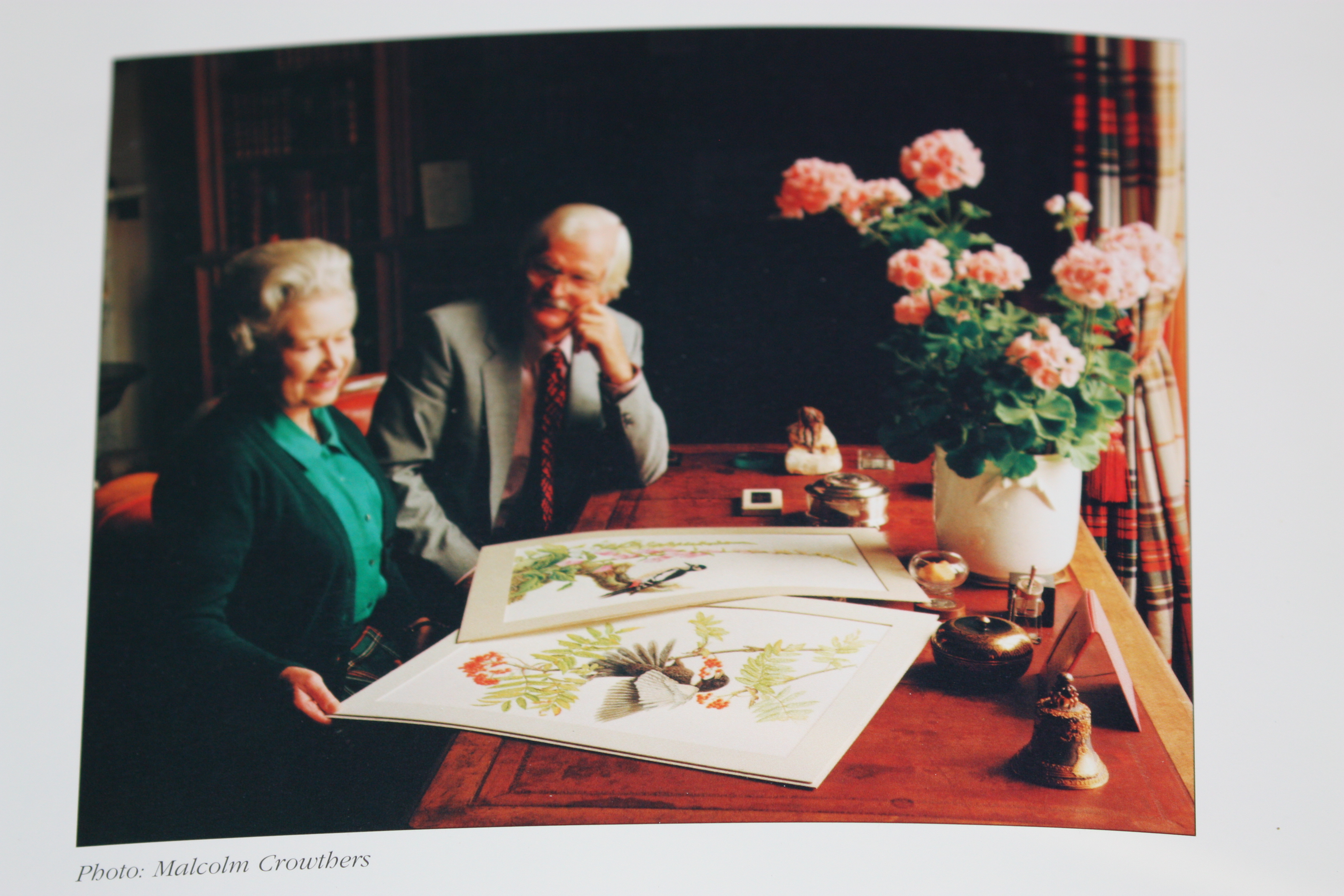
 It’s no coincidence that my blog page features a design of books.  As well as having a great love of nature, like many with similar interests I am a bibliophile.  I have learned over the years to be particular as to what to add to my library and I have two books of which I am very proud to own, both by James Alder.  They are the Birds and Flowers of the Castle of Mey and the Birds of Balmoral. The  former was presented to the Queen Mother and the latter to Her Majesty the Queen.  Whether you are of a left, right or centre political persuasion I think you would be hard indeed not to have found the death of Her Majesty the Queen a sad occasion.  I had my copy of the birds of Balmoral out on the table this week.

Her Majesty previews the artwork

Both books contain some wonderful prints of birds and flowers by James Alder.  There are short introductions in both books and this includes in Birds of Balmoral words from the Queen to James about the conservation work done on the estate of Balmoral of which Prince Phillip had taken a great interest.  The Queen did acknowledge that historically some wildlife was not encouraged on the estate, and of course we all know what that meant.  Let us hope that the numerous gamekeepers on the estate are rather more tolerant these days.

From Court Circular in The Times, June 1998

Anyway, I share one thing in common with royalty, I have both books by James Alder on my shelves.


Whilst I collect books I never kept up a childhood hobby of collecting postage stamps.
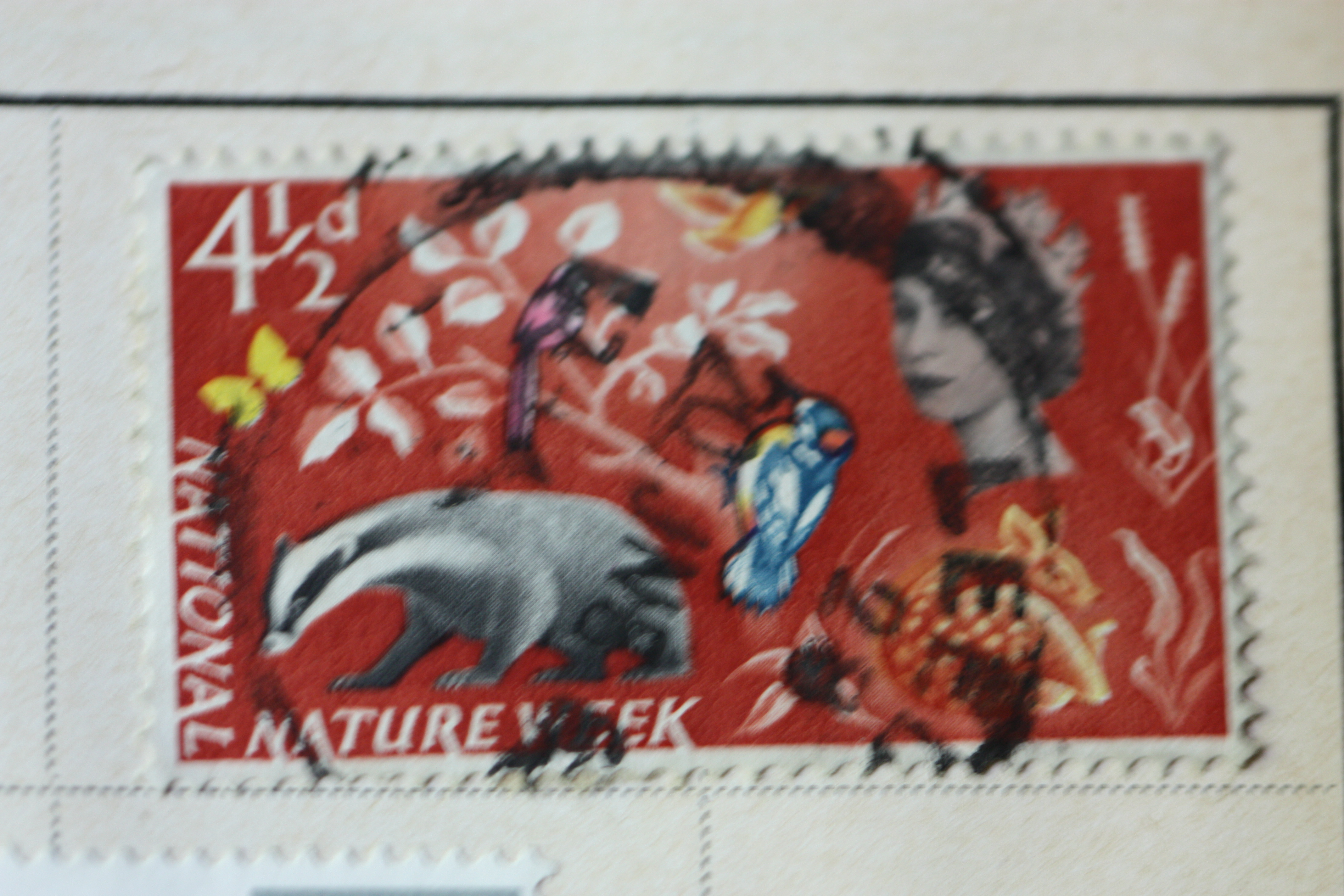
  On refection I wish I had kept it going, as philately is such a great tool of learning.  I’d been thinking just how much the world has changed during my lifetime lived with Queen Elizabeth being the only monarch I have known.  Many of the political and geographical changes to the world are reflected in my small postage stamp book passed to me as a child by my elder brother.  Who would believe these days that in the 1950s you could purchase a stamp for a halfpenny in ‘old money?’


I’ve included a selection of images of postage stamps which have a natural history theme and which were issued, as were many others, during the reign of Queen Elizabeth 11.


I’ll try and not be such a stranger to my blog.


Saturday, 2 April 2022

Spring Returns

 Sitting here typing with the heating once again turned up and snow on the ground outside of the window, the spring heatwave of last week’s seems a distant pleasure, but spring is here and we made the most of it last week.  The botanical interest was from various hues of yellow which were very much a reflection of sun filled skies.  Tall, cultivated Daffodils were very where, Coltsfoot formed a colourful blanket at Castle Island, Lesser Celandines shone like mini suns from the low grasses, Primroses were beginning to show opening flower buds under tree cover and best of all was the dense yellow flowering Gorse at Druridge Pools.  The air held numbers of Small Tortoiseshell Butterflies and the occasional Peacock Butterfly.  The sea was a calm mass of marine blue until hidden by the North Sea mist.

Courtesy of Samuel Hood

A calling Chiffchaff greeted us at Castle Island and we were soon watching three Little Egrets from the riverbank a species which will always excite me no matter how common they become in the area.  Lesser Black Backed Gulls were amongst the gull flock.  Certain gulls appeal to me and the Lesser Black Backed is one of them.  Grey Heron and Teal were among other birds seen here before we moved onto Cresswell Pond.

Before we reached the pond we enjoyed the sight of numerous calling Tree Sparrows.  The pond itself disappointed with the water being extremely high once again, a constant problem over the years.  We did manage to find three Avocet here and picked up Twite at the north end of the pond of which we had better sighting on moving north.  There was no sign of Wheatears.  We thought we might be entertained when a family of four found the crossing covered in water.  Child number two took off his shoes and walked across without falling in which was a disappointment, whilst for some reason child number one ran at the sheep (at least some of them carrying lambs) and chased them away, after which mam and dad followed and walked through the field.  I suppose spring heat brings everyone out!  Skylarks were singing overhead and Stonechats were seen.

Next stop was for a nice lunch in a busy Dinnington pub.  Sadly, my first Barn Owl of the year was a dead one on the roadside, feathers everywhere.  A similar plight of many Barn Owls, I know.

Distant Lapwing

Druridge Pools provided four Ruff and Common Snipe among the other species which included numbers of Shoveler and Shelduck.  I regretted not taking the camera to the viewing platform as the Ruff were close up.  I went off for the camera and on returning the Ruff had moved having been disturbed by the noise of trail bikes.  Having reached the other hide, we found five other folks in it.  I can’t remember finding so many individuals in this particular hide.  We knew a Water Pipit had been recorded here but did not immediately sight one.  I got my eye on a bird on the edge of the water and quietly asked Sam who had the scope  if it was just a pipit i.e., a Meadow Pipit.  Before he had time to look and respond voices from both sides of the hide informed me ‘It’s a Water Pipit’.  The tone suggested that I ought to have known.  I’ve just finished reading Tim Birkhead’s new book Birds and Us in which he mentions Mark Cocker’s hierarchy of birding types.  I think the folk in the hide had me marked down as either a Dude or Robin Stroker of which I am neither.    I do think this bird today was the most obvious one I have seen in Britain as it was beginning to change into summer plumage.  I have only ever seen one in full summer plumage and that was in the Transylvanian Mountains in Romania many years ago which I admit at the time I had put down as a LBJ.  With hindsight I wish I had taken more notice of it at the time.

Distant Ruff

We looked over the sea from the dunes and Sam counted 46 Red Throated Divers.  They were accompanied by Common Scoter, Eider Ducks, Razorbill and Guillemot.  Sea mist was over the North Sea not too distant.  East Chevington proved to be very quiet but we did find a single Pink footed Goose in a small group of Greylag Geese.  Our last stop was at Dinnington pool.  We knew right away from the number of cars and photographers that we might be in luck with Short Eared Owls and it wasn’t long before Sam picked them up hunting in the distance accompanied by Common Buzzard.  It wasn’t long before we had a close up Short Eared Owl fly by.  A pair of Carrion Crows copulated in the tree behind us.

Druridge Pool courtesy Samuel Hood

Overall, a good day with the Water Pipit and Short Eared Owls being birds of the day, with at least 66 species on the day list.  Today the snow, hail and cold continues.  Nowt like a good spring weather to cheer one up!

Druridge Dunes courtesy Samuel Hood

Incidentally, Tim Birkhead’s book is well worth a read.  Tim is an academic who can write informatively and interestingly for the general reader and he is certainly one of my favourite authors of ornithological writings.     

Wednesday, 16 February 2022

Teesdale. May the Force be With You

 We were not going to get a better weather forecast this week so Sam and I opted to visit Teesdale and we were initially rewarded with a blinding winter sun and stunning land and Skyscapes as we travelled through Weardale and onwards to Teesdale.  I had recently benefitted from a reading the Durham Wildlife Trust’s book The Natural History of Upper Weardale so I took special interest in places we passed through such as Stanhope, East and West Gate, Frosterly and St John’s Chapel.  The sun ensured that our outward drive was rewarded with a sharpness of light and clarity.  The higher ground is really stunning which made p for a lack of wildlife in this Red Grouse area.  In any event we knew this was not the time to visit the area to gain the most of bird and botanical interest but there were to be some highlights.

Red-flanked Bluetail

Before we hit Weardale we sighted a Common Buzzard but found only one short sighting of a Red Grouse, this species apparently hunkered down out of the strong, and as we were to find out icy cold wind.  I was extremely comfortable in Sam’s heated seats and so when we arrived at Langdon Beck to look for Black Grouse the wind chilled me to the bone.  There were no Black Grouse to be seen, only four Pheasant in the lower fields, so we continued to the area of Bowlees in hopes of finding the long staying vagrant Red-flanked Bluetail.  This bird should be wintering in S E Asia, but clearly likes it here as it has been around for some time now.  We found the area that the bird has often been seen in among the Beeches but we had no luck until Sam scampered down to the lower pathway.  He quickly waved to me to say he had found it and I followed more slowly.  So, we had good sightings of the Red-flanked Bluetail that spent all the time at ground level, and were able to put one or two other birders onto it.  We had previously seen this species only once before in Britain and that was on Lindisfarne a year or two ago.  The sighting we really remember however is of this bird in breeding plumage in the forests of Finland.  One of our top ever sightings.  If you don’t know what this bird is like in breeding plumage it might be worth looking at an image on the internet.

Red-flanked Bluetail

We enjoyed a wander along the woodland paths and had sightings of Wren, Robin, Treeceeper, Nuthatch, Great Spotted Woodpecker, Great Tit, Coal Tit, Blue Tit, Long tailed Tit, Siskin, Chaffinch and Brambling.  The male Brambling being a highlight.

Low Force

We then made for Low Force a series of waterfalls which tumble over the dolerite of the Whin Sill an intrusion which formed 295 million years ago.  This is a stunningly beautiful area, but potentially very dangerous.  We approached over the Wynch Bridge.  The first bridge at this sight was built in 1704 and is thought to have been the first suspension bridge in Europe.  This first bridge collapsed but was replaced, and users included the local miners.

Sam at Low Force

Standing beside this waterfall you soon appreciate the force of the water and the power of nature.  The sun was occasionally behind cloud but when the cloud passed by the sunlight hit the river and air bubbles causing a sparkling gem like effect and a rainbow by the falls.

Gem Pool

We couldn’t visit Low Force without taking a walk to High Force also.  By the way, the name force is derived from the Nordic word foss meaning waterfall.  High Force is not by any means the highest waterfall in England but it is perhaps the most dramatic and has the largest volume of water in a single drop.  The geology here is fascinating and clearly seen with the Whinsill dolerite at the top, softer sandstone in the centre and limestone at the bottom.  The actual gorge was mainly formed by the meltwaters of the last ice age.  Even at this time of year there was several visitors, but not enough to spoil the atmosphere and what is an exciting experience with nature.  Junipers were growing along the top of the far bank and small lone Scots Pine was surviving on the rock face of the force seemingly well dug into a crack along the rock.

High Force

High Force

I had really enjoyed my walk to the force, taking note of the geology, ferns and other plant life beginning to show as we began to hear the flow of the force and eventually catching sight of it.  We spent a bit of time at the foot of the falls before making our way back up steep steps and upwards on onwards.  The return walk I did not enjoy, being cream crackered and breathless.  As Sam suggested, it’s an age thing!

High Force

By the time we were back to the car it was time to make back home.  We decided to return via Langdon Beck.  That proved to be a wise decision as on stopping we found Black Grouse at lek.  We got the scope out and initially counted fifteen Blackcock before noting two Greyhens flying away from the leking ground and landing in the distance.  Another Blackcock flew in taking the number of males up to 16.  We watched a little action as pairs of the males faced up to one another before the cold defeated us and we returned to the car and heated seats.

We left the area as grey leaden cloud appeared to set in for the rest of the day, but it wasn’t long before we were in sunshine again.  This time the light was much softer giving the whole area a rather fresh look of soft pastel colouration.

It had been an excellent day and we certainly had the best of the weather despite the bitter wind at times.  It was good to see the Red-flanked Blue Tail but for me the stars of the day were the Black Grouse, birds so evocative of this area and wild places in general.  Brambling joins these two birds to form my top three species of the day.  On the journey home we saw a large flock of Fieldfare and a large flock of Starlings plus two Kestrels.   After an hour or so rest we had fish and chips for tea.  Top day, and as Sam said at the time, one with a Nordic feel to it.  Today I’m writing and resting.


Friday, 4 February 2022

Sights and Sounds. S E Northumberland.

 We made off towards Druridge Bay on what was a cloudy, cold and in places windy day (despite the reports of a warm day).  We picked up Kestrel at the side of the road from the A19.  But before reporting on sightings and sounds of the day I will include a couple more images from the patch as we took no photos today.

Oystercatcher in town.

Orange and Harlequin Ladybirds.  Numbers keep changing so they clearly are on the move during hibernation.

This was my first venture off patch this year and our first stop was at Castle Island.  Birds seen here included Little Egret, Redshank, Curlew, Mallard, Wigeon and Teal.   The sound of Jays alerted us to their presence before hearing and tracking down five Greenfinch which flew overhead. Such was the pleasure of finding the rapidly declining Greenfinch species, we got the scope onto them when they perched in the trees.  Any naturalist worthy of the title will be aware of the importance of noting sounds.  I always struggle to remember the name of the disease that has wiped out so many Greenfinches.  The bloke we spoke to just called it the pox so maybe I just need to stick to that, although to me it has connotations of something entirely different.  Maybe that is just me regressing to thoughts of schoolboy banter.   Our next stop of only a few minutes was at the QE11 Park where we saw noting of great note which was not the case at our next stop.

Widdrington pool delivered some good sightings once again with the likes of Smew, Goldeneye, Slavonian Grebe, Red Necked Grebe, Red Breasted Merganser, Marsh Harrier and Common Buzzard.  Sound once again alerted us to Siskin and Coal Tit.  The cold chill contrasted to the warmth we had found here on a previous visit.

We arrived at Cresswell Pond to note that the water was very high and to be told by a bloke leaving that there was nowt about but Wigeon.  I have to say that I would rather not be told this and be allowed to find out myself that there is nowt about.  In truth there was not much about apart from many Wigeon, their whistling soon heard.  In fact, with the cold, wind and high water levels and broken-down hedges the area was quite bleak.  We did find Stonechat on the wire, but the hedges down to the hide were very quiet with only Blue Tit, Great Tit and Dunnock seen here.  A Skylark flew over.  There was no sign of the usual Tree Sparrows.  The farm buildings had taken a battering in the gales too.  The high water level ensured there was no mud bank for the waders but we did see numbers of Oystercatchers and Curlew.  There was little on the water other than the Wigeon and most of there number were on the banks.  There was a single Greylag Goose, but numbers of Pink footed Geese in the field to the north of the pond.  The dunes at different times provided separate flocks of Chaffinch, Linnet and Goldfinch.  We checked the flocks but found nothing else amongst them.

It was time for lunch before we visited Druridge Pools.  The pot of tea warmed me up nicely before we set off again.

Druridge Pools provided sightings of yet more numerous Wigeon, along with Teal, Shoveler, Pintail, Moorhen, Coot, Curlew, Grey Heron and three very nice Ruff amongst a larger number of Redshank.  Once back on the road and out of the cold wind we experienced some rare moments of complete silence.  There were very few folks about and that is a rare thing in Northumberland even on a dull winter’s day these days.  A lone silent Reed Bunting was seen to fly into the bush at the side of the road.  On the road to East Chevington two Red Legged Partridge walked across the road in front of us.

On arrival at East Chevington we heard and watched Long Tailed Tits in the hedges.  Same noted a change in their calls and called Sparrowhawk before we saw a female Sparrowhawk fly above the hedge and across the field.  More of winters sounds, and the one I most associate with winter was provided by several skeins of Pink-footed Geese making varying shapes above us.  Then we got our eye on what we thought was a dead sheep but it proved still to be alive but unable to rise from its side.  Sam alerted the NWT who said they would get an appropriate person out.  The North Pool was quiet but held numbers of Goldeneye, Gadwall another Greylag Goose and other species. 

Before we set off towards the burn Sam noticed another sheep in distress, stuck firmly in the wire fencing.  Sam tried to shift it, but it looked as though it would need wire cutters so he made another call to the NWT.  Our walk to the burn was quiet and on arrival we found the tide high.  In the distance we had seen five Common Buzzards flying together over the woodland.  Two or three Sanderling and similar number of Ringed Plover were seen at the tide edge.  The light was beginning to wane now and we stood, relaxed, and listened to the tide hitting the shore.  There are not many better sounds.  As we left to return to the car swans were seen in the far distance.  By their stance I thought they were Whooper Swans and once we had the scope on them we found that was what they were.  Another Stonechat was seen and just before we got back to the car another Kestrel was seen and the call of Grey Partridges was heard.  We eventually picked out at least four Grey Partridges moving across the field.

It had been a cold but excellent day with sixty-seven bird species seen, twenty-eight of them new for my year list which makes it feel a little more respectable.  So infrequently do I see Greenfinch these days I put them up there with the better birds of the day.

As we left there was no sign of anyone coming to deal with the sheep.  I do hope our alerting the NWT was not in vain.


Tuesday, 1 February 2022

January on Patch

 I’ve not left the patch to seek birds and nature throughout January, and I think my mind has benefitted from a return to basics and the enjoyment of nature on my doorstep.  I’m mindful that my interests in nature began on patch many years ago, so it has felt like a return to those years and I have had much enjoyment from the short and on occasions longer walks which helped to shake off the cobwebs and clear the mind.  I’m hoping that I still have readers of the blog who I know enjoyed the focus upon patch wanderings.

1st Year Winter Scaup

Has January ever provided so many clear blue skies and sun during the years of my watching?  I think not.  It was only the gales of the later days of the month that blighted the month and took numerous trees down across the area, some of them of good age.  Possibly because of such fine weather the bird numbers have in general been low across the patch.  Of course, birdlife present around the area has changed over the years.  I’ve yet to see a Greenfinch this year, so badly effected by disease over the years and I was doubting that I was going to see a Coal Tit until one returned to my garden on the 30th.  The lake too has been noticeably quiet with the Goosanders leaving early, probably enticed to their breeding sites.  The fact that the lake has been affected by the Avian Flu taking a toll on the Mute Swans and we think Canada Geese has been depressing.  I know many other areas of Northumberland have been affected to a lesser or greater degree.  The Gadwall which have begun to frequent the lake in recent years have also left and I have seen no sign of Shovelers.  It was the lake that Sam and I visited during the later days of the month to find the Scaup.

1st Year Winter Scaup

The first winter Scaup provided exceptionally good photo opportunities for us and many other photographers.  It is an interesting bird just beginning to come into summer plumage so we are hoping it may hang around for a while so that we can watch the plumage developing.  Already more noticeable over a couple of days is the vermiculation on the back of the bird.  The greater size of this bird compared to Tufted Duck is very noticeable when the two are seen close by one another.  No doubt a life at sea and feeding habits for the Scaup has played some part in the evolutionary development.

Displaying Goldeneye

Goldeneye

Goldeneye

We took the opportunity to photograph other waterfowl including the Goldeneye.  Finding a suitable angle was not always easy so bright was the sun.  The Oystercatcher feeding in the pools on the grass took our eye as did the much-underrated Jackdaws one of which is white winged and we believe has been around for years.

Togetherness.  Jackdaws are attractive birds.

Sam and I have watched and studied Great Crested Grebes on the lake for many years and we have given a presentation about them to several groups, and we are always available if required.
  We were glad to see that a pair have returned in the past couple of days, perhaps encouraged off the sea by the gale force winds.  Over recent years the Great Crested Grebes have taken to over wintering on the lake, only leaving for a brief period if the lake freezes over.  We noticed this winter they have not been about and can only think that calm seas and mild weather have encouraged them to stay on the sea.  They didn’t provide good opportunities for photographs today, but there’s plenty of time for that and the likelihood is that at least one more pair will turn up.

Pochard.  Good numbers on the lake.

The smaller lake held a pair of Little Grebes and the Grey Heron was back at its usual spot.  Sadly, one of the Canada Geese seemed to be down with Avian Flu.  Sam informed the appropriate agency but they won’t come out until the bird is actually dead.

Mute Swans

We’ve been taking note of the budding trees and the first signs of plants in leaf.  A Snowdrop was found almost in flower on the 1st.  An eye has also been kept of the hibernating Ladybird species.  One of the better sightings of the month was a sunlit male Sparrowhawk over the lake and our heads.  It eventually perched in the trees and disturbed the Goldfinches. 

I heard a Drumming Great Spotted Woodpecker quite early in the month and mid-way through the month watched male and female Mute Swans carefully gathering nesting material by pulling out one by one reeds that had been flattened to the ground.  In recent years and since the reduction in numbers of the swans on the lake, at least one pair have produced cygnets.  I was chatting to a chap at the lake and he was keen on watching bird behaviour and felt that was the element of birding he enjoyed most.  I couldn’t agree more that that is where the fascination lies.  Forget lists and listing and simply watch!

I’m hoping to widen my travels soon.