Friday, 17 July 2015

More Birds, Butterflies and Botany at Bishop Middleham


16th July.  July is not noted for being the most exciting month, but I’ve been enjoying it up till now with more to come before the month ends.

Image of the day.  Ringlets.
 
Today it was a trip to Bishop Middleham, again with Marie and Sam.  Conditions were ideal with no breeze and plenty of sun.  On arrival we walked through the farm building and along to the back of the lake.  Sam suggested that the area was ideal for Little Owl and it certainly is.  It wasn’t long after that comment had been made that we were watching a Little Owl.  Our target bird was of course Corn Bunting and we picked up the jangling key call very quickly and were soon watching a singing Corn Bunting perched on the overhead wires.  Large White, Small Tortoiseshell, Meadow Brown and Ringlet Butterflies were flying over the grassland.


Poppy field
 
The Lake was as dry as I’ve ever seen it with some very inviting areas of mud for waders.  The only waders we picked up were the large flock of Lapwing, Oystercatchers, Redshank and Curlew.  We couldn’t be sure there wasn’t anything else in amongst the Lapwings as we struggled with binoculars to pick up anything across the other side of the lake under the hide.  Certainly nothing stood out and the area was fairly quiet although we had Mute Swan, Greylag Geese, Mallard, Gadwall, Grey and Pied Wagtail and hirundines sightings.  Our next stop and main focus of the trip was to be the old quarry and so we headed off in that direction rather than completing the longer round walk that we usually tackle in the area.
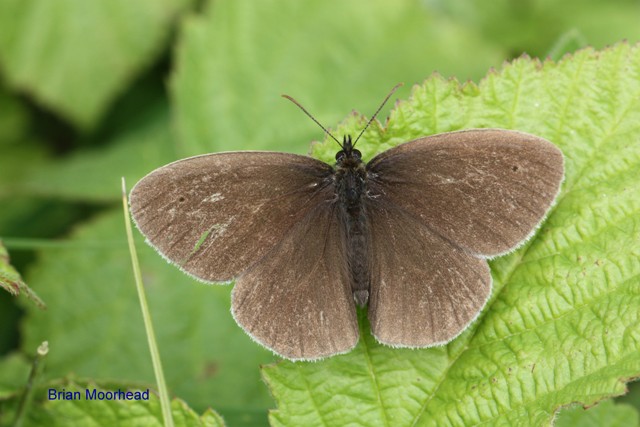
Ringlet

Small Heath

 I’m never disappointed when I visit this quarry, one of my favourite little spots in Durham, but some years are better than others and good timing is essential if you’re to make the most of the butterflies and botanical interest here.  July is usually a good month in which to visit.  We soon found Common Spotted Orchids and Common Twayblade, much of the latter past its best.  Ringlet and Meadow Brown Butterflies were numerous and the Ringlets provided us with our best photographic opportunity when Sam came across a mating pair.  There were fewer but a decent number of Small Heath Butterflies about too.  Sam made an interesting point that the habitat was like much of what we had found in Hungary last year, but sadly there is only pockets of it here.  Another visitor mentioned in passing to me that he had seen images of Marble White Butterflies taken here in the quarry.  Whilst I know that this species does frequent a quarry in Durham (I believe that they were introduced) I wasn’t aware that they frequented this particular area and I have never seen them here.  I’d be interested if anyone can confirm if there have been sightings here.

Common Twayblade 

I didn't notice this insect until I uploaded the images.

As we moved further into the quarry we were on this occasion disappointed to find virtually no Dark Red Helleborines in flower.  Were we too early? I didn’t think so.  Neither did we find the numbers of Fragrant Orchids that usually are so abundant.  On talking to another visitor it was suggested to me that the Rabbits had chewed and destroyed the helleborines.  I did see signs of chewed plants, but I also found plants with new growth which suggested that some of these orchids might simply be late this year, although this would make them very late.  After we took lunch in the sun we were off to look for Northern Brown Argus Butterflies.

Common Spotted Orchid

What appears to be a chewed Dark Red Helleborine

When asked by another visitor what I was looking for I was virtually told I was too late, but I pointed out that we had just seen one.  The guy was friendly and being helpful, but I know this time of year is good to find this species, although I accept they may have been on the wing now for some weeks.  If I hadn’t known, I may have been put off from looking.  I always like to follow my own instincts and not listen too much to others views no matter how well intentioned, and they were well intentioned in this case.  Anyhow by the time we had finished we had found Northern Brown Argus, numbers into double figures.  Most were a bit worn.  I’d also been able to help out one or two other visitors with identification. so it was rewarding time spent.  Common Blue Butterflies and Speckled Wood Butterflies were also flying, but not in great 
numbers.

Northern Brown Argus 

Northern Brown Argus
 
Happily we did eventually come across some attractive Dark Red Helloborines in flower, although not to the extent as on previous visits.  This one is in my top ten list of favourite plants.  I spoke with a holidaying visitor who was seeing it for the first time and he was well impressed.  Wild Thyme, Rock Rose, Birds-foot Trefoil and Eyebright were all much in evidence as was St John’s Wort species near the entrance.  However the lack of other flowering species in any quantity suggested late flowering this year.  After some searching I did eventually find a single Carline Thistle which flower had yet to open.  Marie I understand is returning to France for a trip and will be finding these flowering thistles the size of dinner plates, as they grow much larger in areas of the continent.

Dark Red Helleborine

Dark Red Helleborine
 
I think we spent at least two and a half hours in the quarry, much of the time photographing the Northern Brown Argus and Dark Red Helleborine.  There were few birds about here, but the Sand Martin nesting site was active and Yellowhammer song accompanied us as we walked around the area.  Wren and Magpie made an appearance.

Eyebright Euphrasia.  One of numerous species or types (depending upon which authority you care to follow. 

The name Euphrasia is of Greek origin, derived from Euphrosyne (gladness), the name of one of the three graces who was distinguished for her joy and mirth, and it is thought to have been given the plant from the valuable properties attributed to it as an eye medicine preserving eyesight and so bringing gladness into the life of the sufferer.

Carline Thistle


Another good day and very hot in the quarry where we examined some attractive Snail shells as we where preparing to leave for home.  Now who says July is boring?

Wednesday, 15 July 2015

Nightjar Pilgrimage


To arms, to arms, ye brave!
Th'avenging sword unsheathe!
March on, march on, all hearts resolved
On liberty or death.
Lyrics from La Marseillaise

14th July.  Bastille Day, and our annual pilgrimage to Slaley Forest in search of Nightjars.  Our only arms were netting, insect repellent and a bat detector.  An earlier planned visit had been well timed, but unfortunately cancelled because of thunderstorms and downpours.  This evening we were blessed with sunshine and dryness, although it did appear that dark cloud filled the sky further south and rain appeared to be falling in one particular area.  Our number this year consisted of Marie, Sam and me.

First stop was Corbridge as is our custom.  As we walked down to the river we watched Swifts entering nests at the side of the bridge.  A Kingfisher flew up river and other birds seen included Moorhen, Black Headed Gull, Lesser Black-backed Gull, Mallard, Grey Wagtail, Pied Wagtail, Swallow and Sand Martin.  We had tea sat on the stone remains of the old Roman Bridge and thought about how many feet had walked these stones in the past.  Yellowhammers showed well in this area that is always good for this species and we heard Sparrowhawk calls.  Butterflies seen were Small Skipper, Small Tortoiseshell, Meadow Brown and Ringlet.

We set off early for Slaley as we intended to do some walking on the moor.  Brown Hare was seen as we approached our destination.  When we arrived the air was already filling with insects which did not bode well for later.  Our first defence was used in the form of insect repellent.  In my case a mixture of Deet and Avon Skin Soft.  I might be bitten still, but at least I’d smell nice…well I would smell anyway!

View across the moor towards Derwent Reservoir
 
The moor was as quite as I’ve ever found it with not even any gulls flying over.  We found a few Meadow Pipits, the odd Swallow and Wren, but little else until a few Red Grouse began to lift.  We did eventually hear calling from two or three Golden Plover, but we were never able to locate them.  The air was beginning to cool as we retraced our steps towards the forest but it remained bright and clear and the view was excellent.  Two Greylag Geese were in the area.

Back at the vehicle it was on with another layer of clothing and more of the insect repellent before we took to the forest track.  It wasn’t long after 10.00pm and still quite light when we heard our first churring Nightjar.  By now Sam, Batman for the evening had the bat detector out.  I saw a number of bats fly out of a tree by the track and reckon they were just leaving the roost.  The timing suggested that they would be Pipistrelle Bats and this was confirmed by the flight pattern, the bat detector and Sam.  We didn’t find any other species of Bat this evening.  We did have numerous calling Woodcock fly over and later on a silent Tawny Owl fly over close by us.  I have to say that even the Tawny Owls were quiet tonight with just some distant calls picked up.

After a few short bursts of churring the Nightjars seemed to remain silent however we did have one of our best sightings of Nightjar as one flew from the plantation and across the clearing and back again, giving us a very good showing.  The insects were a real problem tonight and were in my mouth, ears, eyes and nose and the buzz of mossies were a constant threat.  It meant I resorted to a second line of defence and had netting over my head.  It was Sam’s covering so it is thanks to him that I was reasonably untroubled.

Summer Nights
It had been a very good evening and worth the delay, although I wonder if our later trip than usual had meant less churring Nightjars.  I collected the newspapers this morning and folk seemed to be avoiding me.  For the life of me I don’t know why!

Monday, 13 July 2015

Smardale...Botany, Butterflies, Birds, Bridges and a Beasty from the Beck


Whisht! Lads, haad yor gobs,
An Aa’ll tell ye aall an aaful story,
Whisht! Lads, haad yor gobs,
An’ Aa’ll tell ye ‘bout the Worm.

(Apologies to non N E England readers regarding the lyrics.  Google Lambton Worm for information).


11th July.  Smardale Gill Nature Reserve is a National Nature Reserve and SSSI managed by Cumbria Wildlife Trust, and this limestone area has many attractions to naturalist and historian.  Today I had been enticed to participate in the RSPB Local Group trip to the area.  Numbers attending these trips are far cry from past years when waiting lists were kept for places, but never the less there were seventeen keen members ready to explore the area.  I find that the smaller numbers often leads to a friendlier feel with everyone interacting with one another, but perhaps the accounts suffer the consequences and in this respect it suggests to me a need to consider those old concepts of change, modernisation and recruitment.

First thing to catch the eye as we walked eastwards from Newbiggin-on-Lune was the display of flora in this limestone area.  Vetchlings, Birdsfoot Trefoil and Rock Rose suggested that we would not be short of butterfly sightings.  Other notable flora included Melancholy Thistle, orchids, Wild Thyme, Jacobs Ladder, Stonecrop, Betony, Great Burnet, Crosswort, Field Scabious and Yellow Rattle.


Common Blue Butterfly (male)
 
Butterflies and day flying moths were soon catching the eye and leading to some frustration amongst the photographers.  The most numerous butterflies that I was seeing were without doubt Common Blue, Ringlet and Meadow Brown.  These attractive ‘blues’ (both male and female) were at times showing brilliantly in the sunshine.  I also recorded Small Tortoiseshell, Small Heath and a single Northern Brown Argus (the latter seen at the old Limestone Quarry where there were also Common Blues in great numbers.  Other members reported Small Copper, Peacock, Speckled Wood and Small Skipper.  I’d been surprised not to find Small Skipper myself, as they had been abundant on a previous visit to the area.  Unfortunately despite a thorough search I was unable to find Dark Green Fritillary on this occasion and I reckon we were too early for Scottish Argus.  There were also many day flying moths and my prowling in the undergrowth paid off when I was able to capture images of my first ever Chimney-Sweep Moths.

Common Blue Butterfly (female)

Chimney-Sweeper Moth  (The larva feeds on the Pignut plant)

I haven't identified this day flying moth as yet.

Such was the walk through a botanical paradise and my search (often on my knees) for insects, it had almost escaped my mind that I ought to be on the look out for birds too.  If I’m honest I had no expectations at all that this was a good time of year for bird watching in this area.  I was busy photographing butterflies when some group members found a Redstart.  Skylark song filled the air at times as did hirundines and occasional Swifts.  I heard Meadow Pipits and watched as a Kestrel hovered in the wind over the crags. My star bird of the day was a Spotted Flycatcher showing really well as I searched for Dark Green Fritillary.  At the same spot two Jays were seen briefly as they flew off.  Blackcaps and Willow Warblers sang.  Today was not a day to focus on birds and the group list of forty-six reflected that.  We didn’t spend long in the wooded areas which may have ensured that the list number may have lifted a little.

Ringlet

Beauty meets the beast.  Common Blue Butterfly (male) on disintegrating cigarette butt.  Perhaps just perching but I did wonder if it was finding some nutrient here.

 We were soon looking down upon the old eighteenth century pack-horse bridge which crosses Scandel Beck.  Thoughts of who and what this bridge has witnessed over the centuries always springs to mind when I look at it and begin to think of Hugh Walpole novels.  We stopped for lunch at the redundant Limestone Quarry and Lime Kilns.  Lime form the Kilns was taken by rail from the railway siding opposite.  Lunch was interrupted a few times as I grabbed images of Common Blue Butterflies and my one and only Northern Brown Argus Butterfly.

Northern Brown Argus
 
Lunch was finished and it wasn’t long before we were crossing Smardale Gill Viaduct.  This is of course a major attraction in the area.  Built for £11, 928 and completed in 1861.  Restoration work was completed in 1992 at a cost of £350, 000.  Doesn’t inflation hurt?  This viaduct has 14 arches, reaches 27m in height and is 170m long.  It’s worth a visit to the area just to admire it.

Smardale Gill Viaduct 

Scandel Beck leading to the viaduct

The pathway on our return was a bit more demanding but offers excellent vistas.  There was minimal birding interest as the clouds began to come in.  However, we did find the beasty from the beck along this route, or more precisely a Grey Heron did.  We got our eyes on a Grey Heron on the other side of the beck and soon realised it was feeding on what was a snake like beasty.  Was it a snake?  Was it a Lamprey?  Was it an Eel?  Views differed.  What ever it was, it was struggling and certainly a whopping great thing.  I quickly ruled out snake as there is none in the UK that look anything like this yellow rotund monster.  It appeared to have a thin black stripe along part of the body, at the tail end I think.  I’ve watched Grey Herons struggle to swallow Eels in the past but I’ve never seen anything like this.  The beasty had to be approaching four foot in length and it really did have the girth of a large snake.  The Grey Heron took two or three small flights with the beasty in its bill before landing at the side of the beck and dropping it in the water and appearing to spear it.  Lifting it up again, the beasty was swallowed in one large gulp.  I was fully expecting it to emerge again from the Grey Heron’s bill, but it never did.  The Grey Heron then fully sated flew off.  I’m guessing in order to rest and digest its ginormous meal.  This was my sighting of the day without a doubt and having done the research I find that the beasty was in fact a ‘yellow’ Eel.  It seems that they turn this colour as they age.  I must do some more reading about Eels. (It seems that the European Eel can reach a length of 1.5m or 4ft 11ins, but it is rare for them to reach more than 1m or 3ft 3ins, so we had found a rarity).  Unfortunately just too far away to capture an image of any quality and I didn’t even bother to try.

Some dodgy looking characters on the old Packhorse Bridge
 
I finished the day in the café with a pot of tea and a nice piece of cake and having watched the Grey Heron take its fill I was completely guilt free!

Soldier Beetle

It had been an excellent day in an area that has great appeal to me.  OK, few birds, but there was ample natural history to keep everyone happy in this very well managed reserve.    A really good walk that can be taken at a pace that suits.

The journey home provided Lapwing and as we crossed the River Tyne, a Kittwake, taking the bird list to forty-eight.

Saturday, 11 July 2015

North East Photography Awards


A very good evening on Thursday 9th July at the North East Photography Awards at the Great North Museum-Hancock.

Once again lots of entries and a large attendance, so large on this occasion that meant that we were moved upstairs to a large room and even then there was extra seats brought in.  George McGavin of TV fame gave an excellent presentation and the fact that I’d seen much of this at a previous talk given by George made it no less interesting.  George does not take himself too seriously, a good trait often found in people who really do know their subject.  Well done to all concerned with the arrangements and all those who entered the competition.

I was there on the night especially, as I knew Sam (Underthehood) had five images shortlisted on his first time of entering the adult sections.  I’m more than pleased to say that Sam won the Wildlife in Action section with a stunning image of a Great Crested Grebe on Killingworth Lake.  Sam has spent more time watching and photographing these grebes than anyone I know, and not just when the birds are displaying, so the award could not have gone to a more appropriate person.  The image which was actually taken in June is a stunner and I believe was certainly up there with the best entries.  This award comes after a earlier this year winning the junior section of the Scottish Nature Photography Competition, so this guy is on a roll at the moment. 

CONGRATULATION SAM!  A very well deserved win.

The man himself...Sam

Unfortunately Sam wasn’t able to be there on the night as he was on an island in the Firth of Forth.   At the Bird Observatory on the Isle of May participating on a week’s Young Birders Course with the SOC. Am I envious?  Well just a tad.  (I’m actually as green as a Goblins Gumboots).

Wednesday, 8 July 2015

Killy Fresh from the Undergrowth


8th July.  I can’t claim that my garden this year has been alive with butterflies, but there is time yet.  The Speckled Wood Butterfly remains the most common visitor and oddly enough the Holly Blue has been the second most seen butterfly here, but these soon disappeared after a few days.  (A Speckled Wood Butterfly was seen today by the lake).  Otherwise it has been a single early Comma, Small Tortoiseshell and brief Peacock and Red Admiral fly through and a few whites.


Ringlet
 
After another frustrating hour or so in the sun earlier in the week I decided to return to the patch insect site before the rain began today.  I thought I might stand a better chance of finding some listless butterflies under cloudy conditions.  There were certainly plenty of Skippers, Ringlets and Meadow Browns on the sunny day and I found a few again today.

Large Skipper
 
I’ve included a few images from both days.  It wasn’t until today that I had any luck with Ringlet and Small Skipper.  In fact I believe this is the first Small Skipper I can definitely claim to have seen so far this year.  Large Skippers have been numerous.  I have yet to check out the identity of some of the insect life.

Small Skipper
 
I thought I may have my session cut short by a heavy downpour.  It was in fact cut short, but not in the way I expected.  I left after my card began to play up and I lost what I think may have been the best of my images of an unknown, but very obliging and colourful insect.  I suspect I sound a little like the angler who claims the largest fish got away!  I thought initially I’d lost everything from the card but that wasn’t the case.  First time I have had that problem so can’t complain.

Five Spot Burnet

Straw Dot Moth
 
I’d passed by the lake which is very quite indeed although the four cygnets which are a good size now were resting near the pathway.  Less success for the Great Crested Grebes this year I’m afraid as this seems to have been the first time for some years that young have failed to be produced.  I’ll probably have more to say on that at a later date.


 The butterflies helped to brighten up what has generally been a dull week, as did the colourful insects.


 I’m looking forward to attending the North East Photography Competition Awards tomorrow at the Hancock.   It is always a good evening.  6.00pm at the Hancock 9th June.  I didn’t enter (must do so next year), but know some who have. :-)

Wednesday, 1 July 2015

A Hide with a View Ends a Frustrating Day


30th June.  Sam and I ended our day in the new Mathew Ridley hide at Gosforth Park Nature Reserve.  This was our first visit to the hide since it opened and we were very impressed.  My first thought was that there can’t be any better hide in Northumberland, and then my second thought was that there isn’t much in the way of competition really!  Much is owed to the volunteers who built it and of course the donors who paid for it and the architects who designed it (free of charge I believe).  The hide is on two levels and can take forty people so will be ideal for the likes of school parties, a very forward looking investment.  If you’re a member of the Natural History Society of Northumbria you may already have visited and if you haven’t probably will in the near future.  If your not a member I believe there is to be an open day for the public soon, so go a long and take a look when that chance arises and you may be tempted to join what is the best local organisation for anyone interested in natural history, certainly the best in my book anyway.  Just pleased that there wasn’t forty folk in there today as it was stifling in the very high temperatures.  I was almost wishing today that it was cold again!

A hide with a view
 
We’d begun the day at the Rising Sun Country Park where we began with an excellent sighting of the local grebes.  It wasn’t really a birding day however and we had set our sights on butterflies, dragonflies and plants.  We had little in the way of luck with dragonflies and although finding plenty of orchids we failed in our search for Bee Orchids.  Plenty of butterflies were found, but they were so flighty the frustration set in.  It was almost impossible to get any images, although once again the butterfly that did settle just long enough to give me a chance of macro shots was the Large Skipper.  There was no chance with the numerous Common Blues and Ringlets so I took my chance with some other insects.  By the time we had walked around the park we were done in by the heat and much needed refreshment was sought in the busy café.  A drink and a sit in the shade did the trick and we set off for Gosforth Park Nature Reserve.


Large Skipper
 
There was more frustration when we found that the Coral Root Orchids had passed us by.  We weren’t the only ones searching.  I did find a couple of stalks, but it was suggested that because they were greenish that could not be what we were after.  I’m still inclined to think it was what we had been searching for, as this orchid does show some green tinge, but there were certainly none in flower anywhere near to the viewing point.  The dragonflies proved illusive too, as a number of them flew over the pond but too distant to identify with any confidence.  I think Sam did eventually pick up what appeared to be a Broad-bodied Chaser and we think the others were chasers too.


The butterflies were just as flighty here, but I did eventually capture an image of a male Common Blue.  We did see lots of butterflies today and the list was Small White, Large White, Large Skipper, Small Tortoiseshell, Common Blue, Speckled Wood (large numbers of them again, especially in the reserve), Meadow Brown and Ringlets (lots of them).  Quite a bit of botanical interest today too.  We did a bit of tree watching but haven’t gone as far as talking to them yet, but if the temperatures rise anymore you never know what might happen.

Male Common Blue Butterfly on orchid

 So not a day for birding really and we weren’t out at the correct time for photographing insects I know, but quite a few birds seen none the less including our Grebes and a few heard including Blackcap, Reed Warbler, Chiffchaff and Willow Warbler.  A Grey Squirrel was seen as we left the reserve!

June goes out on yet another very good if frustrating day in the field.