Tuesday, 11 May 2021

Castle Eden Dene

The evening before our visit to Castle Eden Dene, I had a long and close encounter with a Hedgehog, which I was able to watch through the patio window unknown to the subject and at times with only inches between me and it.  Once a regular visitor to the garden, such visits are rarities now reflecting the national decrease in numbers of this species.  This one did seem to know its way around, so I am hoping it is staying beneath the bushes at the back of the garden.  Perhaps my best ever watches of this species, as it sniffed and scratched the entire time that it searched for food.  It seemed in excellent condition.

My encounter with the Hedgehog reminded me that it is often the commoner smaller things that offer the most enjoyment.  During visits to southern Africa, I did the usual safari trips to watch the larger mammals, and of course birds.  Large mammals are exciting to watch of course, but one thing that stays firmly in my mind was when we ditched the transport and went on a walk in Northern Zambia in search of smaller flora and fauna.  The walk was only momentarily disturbed when our Zambian guide informed us that we were now standing at the spot where he had been bitten by a Black Mamba.  I have no phobia of snakes, but I did not fancy a Black Mamba for company.  Our guide had radioed for help as soon as bitten and was told help was on the way and not to panic!  Fortunately, he was no Corporal Jones.  Fortunately help and antivenom was given quickly.  Collapse can take place within forty-five minutes after being bitten and death can occur within hours if not treated appropriately.  I was confident there are no Black Mambas in Castle Eden Dene and so our visit was to be a relaxing experience.

Wild Garlic

Garlic Mustard

We arrived at the dene quite early in the day hoping to miss the showers forecast to arrive from the west.  A small field near to the carpark was a carpet of Cowslip.  Our first sightings as we took the steep pathway down into the dene were a Grey Squirrel and Great Spotted Woodpecker.  It was to be the flora that took most of our attention.  Much of the area was covered by mats of Wild Garlic.  Now, I believe some folk like the scent of this plant but I cannot understand why, as I have never liked the smell or taste of garlic.  The flower is extremely attractive, especially when seen in close up.  Garlic Mustard was also to be found and I initially got the two plants mixed up in my mind.  As we continued our plant hunt a Frog hopped out of sight and a Rabbits ears appeared close by us.

Water Avens

Our walk was to be a slow but interesting one, as we examined the flora in a damp and cold atmosphere.  We wondered was the Currant shrub Redcurrant or Downy Currant?  In fact, further research proved it to be a sterile Mountain Currant.  All three species are represented in the dene.  A favourite plant of mine, Water Avens was there in great number.  Harts tongue Fern and other ferns grabbed our attention, as did numbers of the Lords and Ladies plant.  The Harts Tongue fern commonly named because of its tongue like shape and hart being the name of male Red Deer.  These ferns and the the emerging Great Horsetails added to the wild feel of the area.  Before we had reached the foot of the pathway we had seen patches of Golden Saxifrage and Wood Forgetmenot, at least two species of Violet, Barren Strawberry, White Dead Nettle, Bugle, and Bluebell.

Water Avens

Wood Forgetmenot

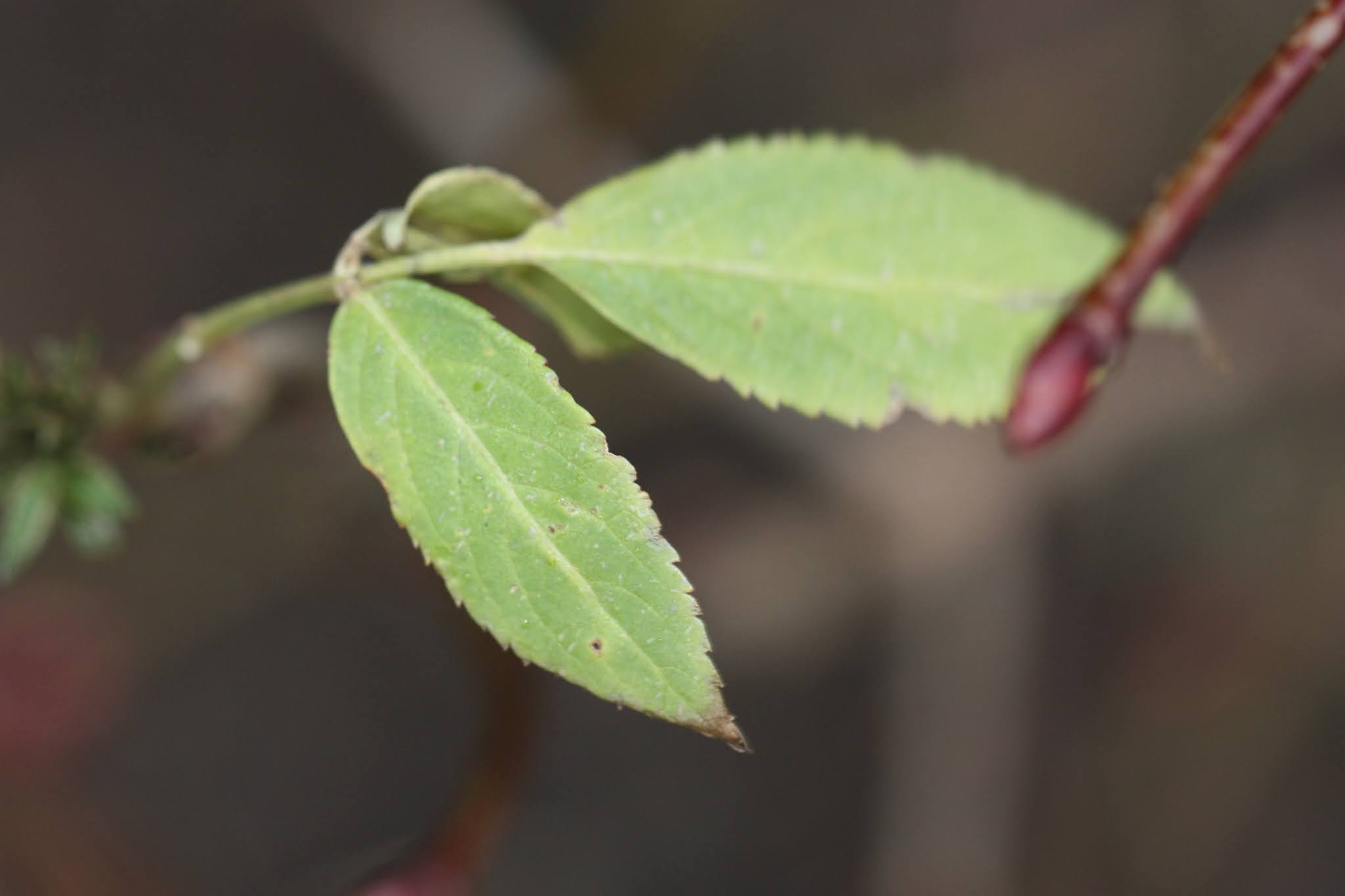
Mountain Currant (sterile)

Once at the foot of gorge the steepness of the sides became apparent.  Our minds pondered on the process of this gorge being slowly cut out of the magnesian limestone over the past millennia.  The magnesian Limestone had formed on the bed of an inland sea during the Permian geological period.  Trees that surrounded us included many Yews, Oaks, Wych Elms, Ash and Hazel.  I found later that one thought on the origin of the name ‘Eden’ is thought to have derived from the earlier Yoden or Yew Dene.

Wych Elm

Castle Eden Dene

We took one of the narrower and quieter routes and as the sun came out so did the bees and butterflies, the latter included Large White, Green Veined White, Orange Tip and Peacock Butterfly.  More plants were found including Primrose, Daisy, Wood Sorrel, Wood Anemone and a wall of Golden Saxifrage on the side of the gorge over hanging the burn.  There was little water in the burn and I believe it often dries up completely in summer months.  However, there was enough water to offer the relaxing soundscape by which I could have happily laid down and taken a nap.

Castle Eden Dene

Golden Saxifrage

Fern sp

Included in the soundscape was the song and calls of birds such as Wren, Dunnock, Robin, Song Thrush, Blackbird, Blackcap, Willow Warbler, Chiffchaff and Nuthatch.  I suggested that a Dawn Chorus walk here would be special.  Although, on this occasion I did not suggest we get up at three in the morning to get down here to take part!  Two Common Buzzards circled high above us in the warm thermals and showed wonderfully well in the now bright clear light.

Green Veined White Butterfly on Wild Garlic

The bird species of the day for me was a pair of calling Marsh Tits which we watched gathering moss and lichen from the trees to add to a nest.  This pair were seen at their best in good spring lighting conditions and so looked in pristine condition.  We sat in the sun foe a while to take in our surroundings before heading back for our climb out of the dene, and it was a climb.  I was cream crackered when we reached the car.  In truth, I was cream crackered halfway up the pathway.  I had forgotten left my sandwiches in the fridge so perhaps I can use that as a rather weak excuse.  I soon got my breath back and watched a Tree Sparrow in the carpark.  A Kestrel was seen during the return journey, during which the heavens opened and rain lashed down for maybe twenty minutes.

Harts Tongue Fern

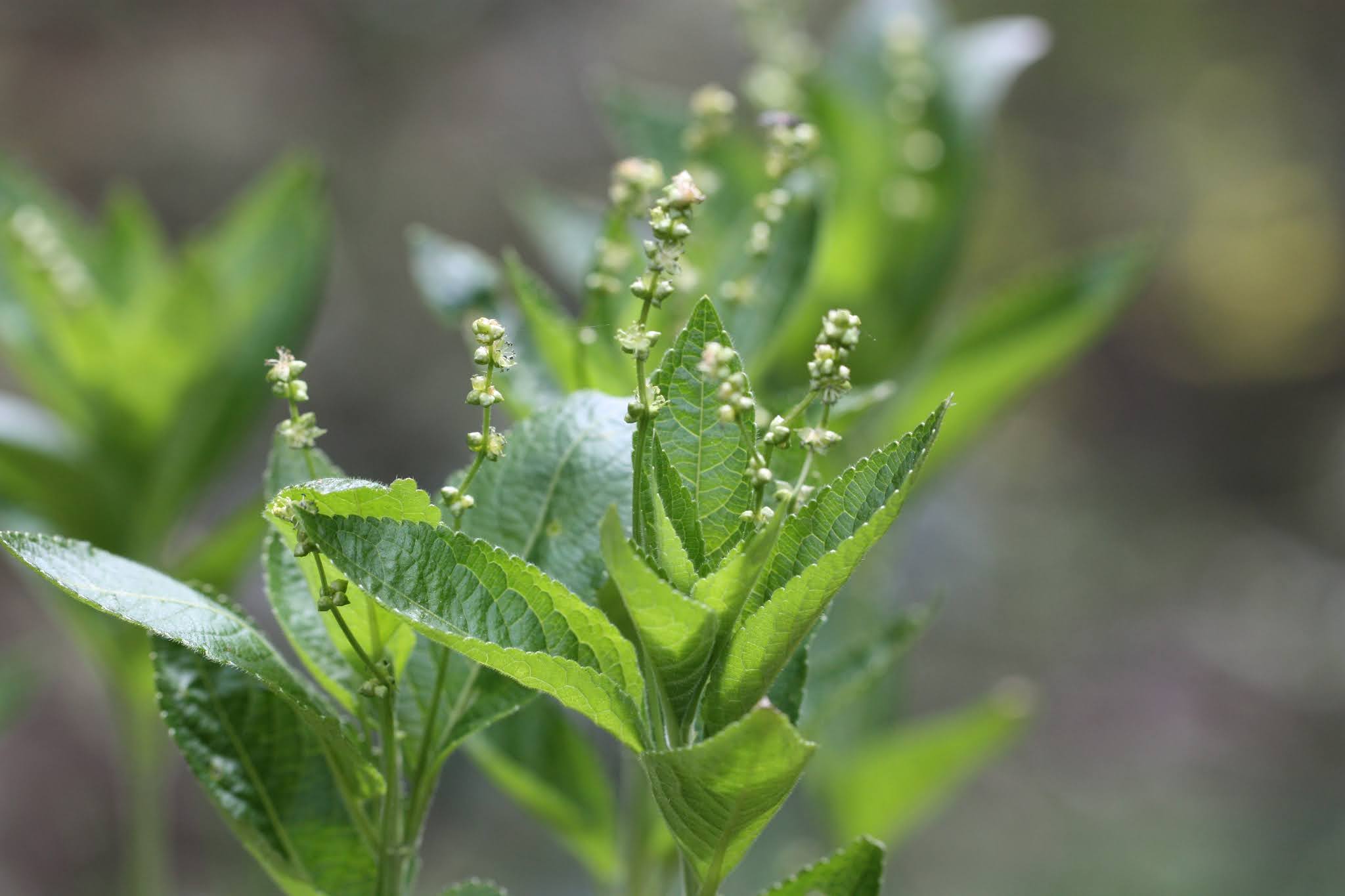
Dogs Mercury

A great day at Castle Eden Dene and I think I managed to avoid putting my feet into dog faeces.  Yes, some dog walkers seem to think it unfair that they are requested to clear up after their pets! 

Blackthorn

I am sure the enticement of birds, botany and atmosphere will lure us back soon.

Barren Strawberry

Emerging Great Horsetail

Having completed the blog I looked out into the garden and found the Hedgehog again.  It was still scratching and seeming to find plenty of food.  Natures little things continue to please.  

Wednesday, 28 April 2021

Spring Birding in Wintery Northumberland

The recent balmy days of spring had vanished to be replaced by an increasingly cold northeaster, cloud which grew greyer and darker as the day progressed and a chilling air.  Bird sightings did make up for any discomfort and as all weather birders we were dressed for action.

Yellow Wagtail

If any of our spring arrivals deserves to be seen in warm bright sunlight, the Yellow Wagtail must qualify.  Unfortunately, it was under leaden skies that we watched this stunning yellow species showing well in front of the hide at Druridge Pools.

Yellow Wagtail

On our journey northwards I suggested that we take in Castle Island.  My suggestions occasionally bring rewards and today we were to find two Little Ring Plover on the sand bank.  Behind us we had the song and calls Blackcap, Common Whitethroat and Chiffchaff as numerous Swallows fed over the river.  I didn’t pick up the Sand Martins, but they were there in smaller number.  A Common Buzzard was being mobbed by corvids in the distance and a Common Sandpiper was seen on the sandbank.  As we left the area I had two thoughts in my head, first one was that it was much colder than I had expected, although the rain had stopped, and secondly we must try and find out the origin of the name Castle Island.

Our next short stop was at the southern of the Woodhorn Pools.  I had not visited here for a long time.  We found our first of the year Sedge Warblers here and watched Common Whitethroat.  Two Lesser Black-back Gulls were also seen,  After a chat with fellow birders, we set of for Cresswell.  As we passed the Drift CafĂ©, the carpark seemed quite full but no one perhaps understandably was sitting outside.  A Barn Owl was seen hunting at first close to the road and not at all put off by people and cars.  It was mid-day so maybe there are already youngsters to feed or maybe the weather conditions of last night had not allowed flying.  When we parked up we watched the Barn Owl at distance.  Meadow Pipit and Linnet were near to the parking area.

We walked to the hide, but didn’t enter.  Tree Sparrows had been seen near the farm buildings and although the pool seemed quiet, sightings included Black-tailed Godwits, Redshank, Oystercatcher and Avocet.

We had a break for lunch at the northern end of the pond before watching more Avocets, seven I seem to remember so they seem to be into double figures here.  We felt it strange that these days we take these birds for granted in Northumberland when only a few years ago they would have caused much excitement.  A lovely bird.  We made off towards Druridge pools.

We were soon listening to Willow Warbler and more Sedge Warblers, Chiffchaff and Common Whitethroat.  Sam picked up the more distant reeling of Grasshopper Warbler.  We found a lone late Pink-footed Goose, perhaps injured among Greylag and Canada Geese.  The air was full of Sand Martins and fewer Swallows.  Black-tailed Godwit, Lapwing, Ruff, Redshank, Pintail, Wigeon and Teal were amongst other birds seen.

Lapwing

Yellow Wagtail

A stunning male Stonechat was seen in pristine condition whilst we moved to the farther hides.  This was where we had the good sighting of Yellow Wagtail.  Eventually a pair of Garganey showed themselves at the edge of pool as they dodged behind sedges.  I think we agreed that this was our sighting of the day, not least because we see this species so rarely.  I understand from birders we had earlier spoken to that there are two pairs of Garganey present, but we only found the one pair.  Two early low flying Swifts flew above our heads.  I have recently ordered a rather smart looking and newly published book about Swifts from Little Toller, The Screaming Sky by Charles Foster.  A Kestrel was seen near the wood.

Garganey.  Size can be seen next to Mallard.

We made off again, this time to East Chevington where a potholed road has been rather poorly and patchily repaired.  The rain began as we made the journey.  It got heavier as we arrived so we chatted in the car as the rain got heavier.  As chilled (in both senses) all weather birders we decided there was only one route to take here, and that was the route home!

Despite the decline in the spring weather, we had enjoyed a really good day of birding with some unexpected sightings.  Our species list was 60+ without really trying.


Wednesday, 24 February 2021

In Pursuit of Spring

It was March 1913 when writer and poet Edward Thomas set off from his home in Clapham to walk westwards to Somerset in pursuit of spring.  The book that describes his journey and his gradual finding of the early signs of spring became a classic of English literature, and although that work will not be to everyone’s taste, I found it to be an excellent, refreshing and relaxing read.  I was reminded of Edward Thomas and his pursuit yesterday, as we slowly wandered in relaxed mood around part of the patch.  Spring has of course yet to arrive, but it was one of those mild bright days that suggest winter will not be with us forever.  I must confess that even as someone who enjoys the crisp clear days of winter, I don’t ever remember looking forward to the coming of spring with quite so much intensity, nor feeling the depressive effect of bitter and dismal dreary winter days so acutely.  Edward Thomas found that these teasing mild days are often followed by wintry spells and I’m sure we have some of those still to come, but best to enjoy the good days while they are here.


Honeybee on Crocus

Insects were about in some number and bird song was beginning to fill the air as we checked out trees again around the area of the village.  The birdsong that was most noticeable was that of the Song Thrush and Robin, with one or two Wrens in full song too.  A Great Spotted Woodpecker hammered away high in the trees of the church grounds.  Bullfinches were heard occasionally about the area, but sadly none in full song, and both Greenfinch and Siskin flew above our heads.  Mistle Thrush was heard and seen and a small number of Redwings were also recorded.

Orange Ladybirds

The crocus and snowdrops were attracting insects and a notable sighting was what I believe was a Honeybee visiting the crocuses.  There was a scent of spring in the air, stemming from the earth and plant life beginning to show.   The dormant Orange Ladybirds that we had found recently on the gravestone had disappeared, but Sam had been given information on more to be found on another gravestone and these were quickly detected, all fifteen of them.  The Orange Ladybird is expanding in number now that it has adapted to Ash and Sycamore trees of which there are plenty in this area.  I have noted that this species of Ladybird thrives on white powdery mildew that forms on leaves and may feed on small aphids.  It did go through my mind that if I were to focus attention on a small area of our patch, the church grounds and the immediate area that adjoins it would be a good spot to choose.  I intend to keep watch here throughout the seasons, more so than usual.

Male flower.  Alder.

Bark of Alder

We spent a good deal of time checking out the trees and examining their buds and other aids to identification.  I am making a little progress!  Two species given particular attention were Alder and Hazel.  Both Monoecious, that is bearing both male and female flowers on the one plant as opposed to Dioecious where there is distinct male and female plants.  The tree pollen was certainly abundant when we shook an Alder branch.  We had to clean the pollen from our clothes.  Alder has an important symbiotic relationship with nitrogen fixing bacterium which is found in root nodules.  The bacterium absorbs nitrogen from the air and makes it available to the tree, which in turn provides the bacterium with sugars, which it produces through photosynthesis.

Female flower of Hazel

Male flower of Hazel

We looked at many other species of tree before setting off towards the lake.

Bud of Ash

Bud of Lime sp

Bud of Goat Willow

We have both watched Great Crested Grebes on the lake for many years and know it is about this time of year when they show up.  Having said that we have found that in recent milder winters these birds often stay throughout the year leaving only if the lake freezes over.  Happily, we were able to watch a Great Crested Grebe in perfect breeding plumage as it called to attract a mate.  We only saw the one bird, however that is not to say another wasn’t hidden in the reeds.  There will certainly be a pair showing soon and that will no doubt bring another harbinger of spring, the photographer!  As we watched the Great Crested Grebe, calls were heard calls from Little Grebes.  Look here if you want to see some fine images taken by Sam of Great Crested Grebes.  https://www.wildintrigue.co.uk/urban-wildlife/close-to-home/

Bud of Beech

Bud of Hornbeam (Fastigiata)

Three Oystercatchers, now regulars at the lake, were calling in amongst the many Canada Geese, and many Goldeneye remain.

Bud of Elder

We had walked for three hours without covering much of a distance, so won’t be out doing Edward Thomas, but nevertheless we had seen much of interest on what was a wonderful quality day.


Saturday, 30 January 2021

Nature's Pleasant Sounds

 I recently came across the following poetical words written by John Clare whilst he lived out the latter years of his life confined to the Northampton Asylum.  For some of these years Clare was free to roam in the asylum grounds so may have still had access to at least some of these sounds, whilst some may be distant memories.

Pleasant Sounds

The rustling of leaves under the feet in woods and under hedges;
The crumpling of cat-ice and snow down wood-rides, narrow lanes, and every street causeway;
Rustling through a wood or rather rushing, while the wind halloos in the oak-toop like thunder;
The rustle of birds’ wings startled from their nests or flying unseen into the bushes;
The whizzing of larger birds overhead in a wood, such as crows, puddocks, buzzards;
The trample of robins and woodlarks on the brown leaves, and the patter of squirrels on the green moss;
The fall of an acorn on the ground, the pattering of nuts on the hazel branches as they fall from ripeness;
The flirt of the groundlark’s wing from the stubbles- how sweet such pictures on dewy mornings, when the dew flashes from its brown feathers.

John Clare

I fear Covid19 has us all under some level of indefinite confinement now and I felt it apt to list some pleasant sounds from nature that I am especially fond of.  In my case the words will be non-poetical.  One or two are distant memories from my childhood, but most are sounds commonly heard.

Pleasant Sounds.

The tide as it flows onto sand or shingle, and the quieter swish as it retreats.  The crashing of waves on the shore during heavy seas.    Waters of a stream as it gently flows by and the gentle patter of light raindrops on the leaves of woodland trees.  Waters gushing down channels of fellside after heavy storms.  The gentle plop of fish as they jump out of river or lake.

A Cuckoos call on a sunny Sunday morning as church bells ring out.  The melodic song of the Blackbird on summer evenings as the light begins to fade and night approaches.  The bark of distant deer in woodland in the cool dawn air.

The swishing sound of trolley buses driving slowly through snow and slush as the headlights flash across my childhood bedroom ceiling.  Sounds of treading through thick newly fallen snow.  The calls from skeins of geese on cold clear days of winter.  Eider Duck calls.  Ice sheets cracking as a thaw sets in.

The very beginning of the dawn chorus whilst it is still dark and before the growing crescendo from multiple species.  The rustling of reedbeds blown by a light wind.  The snuffling of the Hedgehog as it slowly makes its way across the lawn in darkness.

The drone of bumblebees as they search for pollen on hot summer days.  Small rocks rolling down steep scree.  The growing all round sound as one approaches a seabird colony and breathes in the scent of guano.  Murmurs from a Starling murmuration.  Calling from Tawny Owls in the darkness.

Churring Nightjars as sunset fades and darkness takes over.  The clap of the Nightjars wings and drumming of Snipe.  The sound of silence now so infrequently found in our modern world.  The melancholic song of the Bullfinch in winter.  The rustle of leaves blown by a gentle breeze.  The reeling of Grasshopper Warblers in late evening when other birds have fallen silent.  Calls from myriad corvids as they gather pre-roosting.

Killy Birder

Well, that is a few sounds that I enjoy, and I have deliberately not included photographic images (most expect them these days) as this is all about sound and imagination.

Sound is so important if you take seriously an interest in the natural world.  One of the reasons I gave up on group birding is that I found so many folks more interested in their own voices and that of their companions, much more so than the natural sounds around them.  I cannot help but feel John Clare would have agreed with me on that one.


Sunday, 24 January 2021

Winter Walk at Holywell

Over the years that I have written this blog an area that has made a frequent appearance, being a favourite walk of mine, is Holywell.  Sadly, in 2020 seem to remember having made only one visit early in the year before lockdown hit us.  Well, here we are again in lockdown for what seems an indefinite period and I have made a return on what was a wonderful winters day offering pellucid blue skies, sharp clear air, wide open spaces, and the more intimate wooded dene.  Everything that was required to brighten the mood.  Sam and I had planned this visit a few days ago having considered the weather forecast.  A sheer coincidence saw us watching Cain Scrimgeour aka Holwell Birder, and Heather Devey on the local news this week.  Cain’s interest in natural history as a youngster blossomed in Holywell and he is known to most who visit this area, and it is good to see him having done so well, continuing along the pathway which he connected to in childhood.

Two roads diverged in a wood, and I,
I took the one less travelled by,
And that has made all the difference

From the Road Not Taken by Robert Frost

We walked from the village in the direction of the pond at first noting the birds visiting the increasing number of garden feeders, and realising we were going to be in for a very muddy time.  All the feeders were well topped up in stark contrast to the NWT feeders at the feeding station which were empty.  I realised that it might be difficult for anyone to get down here to top them up, but I did think at this time of year someone from the NWT would somehow have ensured feed was provided.  We walked down alongside the Silver Birch and heard Tree Sparrows.  The mud, which was to be with us much of the day, held signs of Moorhen.  We later sighted Tree Sparrows in the Hawthorn hedges while a Great Spotted Woodpecker flew overhead and more distantly a Sparrowhawk dropped into the woodland on the opposite side of the pond.  The water in the pond was extremely high, and in comparison to winters some years ago, held few birds.  Mute Swan, Mallard, Tufted Duck, Goldeneye, Teal, and a Cormorant were seen.  It was about now were heard our first Skylark passing overhead and we later found a small flock of 10 in flight.  A few Greylag Geese were in the air.  A confiding Robin followed us along the pathway as if seeking food.  We were by now out of the cold wind which seemed to be coming across the flashes in the western fields.  White Dead Nettle provided our first blooming flower of the year.

As well as our prints there was signs of Moorhen

White Dead Nettle

What can often be a small flash in the eastern field had grown and at its edged both Redshanks and Turnstone were feeding.  It was not long before we had several skeins of Pink footed Geese formations flying in various directions about the area towards the coast  and then appearing to move further inland, their calling unmistakeable, and one of winter’s great delights.  A large flock of Lapwing lit by the sun also flew away from the coast and seemed to be making for the area surrounding the pond.  We assumed that the coastal tide was high.  At least one Kestrel was seen and at least three Common Buzzards displayed high above.  A bright Yellowhammer made short quiet calls from a hedge.

We’d walked part of the Avenue, having to plodge through pools of water covering our feet but had decided to avoid entering the dene from this path having been advised by two friendly horse riders that we would need wellingtons to do so.  I was surprised at how much colour was shown by the Gorse along the Avenue.  A stunning lemon yellow in the sunlight. 


Gorse

On arrival at dene we left the worst of the pathway pools and mud behind as we followed the higher path that gives views through the trees to the Seaton Burn below.  The mud-coloured burn was a running fast and high towards the sea and I give up hope of finding Dippers today.  Since our previous visit, several trees had been damaged to a greater or lesser extent.  In one or two areas much more light is going to reach the undergrowth, and will be worth watching for change in flora.  This natural destruction will benefit wildlife so hopefully not too much tidying up will commence.  Overall, the dene does seem to be managed well i.e., not interfered with and over tidied..  We studied a variety of trees and I tried to ensure that my new words such as epicormic and lenticel were placed firmly in my memory.

Dene footpath

One of the larger Beech Trees.

Over our lunch stop on the lower pathway birds that appeared close by included Great Spotted Woodpecker, Stock Dove, Blackbird, Robin, Wren Dunnock, Nuthatch, Great Tit, Coal, Tit, Blue Tit, Long tailed Tit and Chaffinch.  Unlike the feeders at the reserve the feeding station here was well stocked with seeds and fat balls.

Oak bark

Sycamore bark

Before re-joining the upper pathway on our return walk we found a single small Red Campion in flower and signs of Dog Violet which will flower in early spring.  Sam got his eye on birds in the fields and we counted as we watched several Mistle Thrush, Redwings and Fieldfare showing very well in the clear atmosphere.  Sometime was spent here taking in the birds and atmosphere.

Early Red Campion

Beech bud

Continuing towards the village we passed the ridge and furrow system on our left, reminding me of the long, interesting history of this area.  We were muddied, but more than content with our hours spent in the winter air.  The skies were completely clear of cloud suggesting a hard frost tonight, which proved to be the case.


Tuesday, 19 January 2021

On Patch & the ''No Idea Tree''

 All day and night, save winter, every weather,
Above the inn, the smithy, and the shop,
The aspens at the cross-roads talk together
Of rain, until their last leaves fall from the top
(From Aspens by Edward Thomas)

The almost blinding bright lemon sunlight enticed me out onto patch and I had the intention of walking to the lake then onwards to the village.  Before I got to the lake I realised that the sunlight gave a misleading suggestion of warmth, as the air was bitterly cold and the paths in part covered in thin black ice.  A fellow walker mentioned as we passed one another that there were two Water Rails at the side of the smaller lake.  This species is only a very occasional visitor to patch so I stepped out.  It was not one to miss. 

I hung around the smaller lake for an hour and a half, the cold eventually seeping through my layers.  I thought at one point that I has spotted the rails in the reeds, but distance, position and light combined to make me uncertain.  My plan to walk further came to nothing although on the positive side I did meet two or three old friends I had not seen for some time and so enjoyed a chat.  No one was picking up Water Rails.  I kept on the move partly to keep at least some warmth and partly to give different angles of view.  I did notice that now the lakes had become unfrozen the numbers of Goosanders had increased, but there were still fewer birds about than would be expected at this time of year.  I decided to give up and make home for a hot drink.  I took one last look, and low and behold, had a decent sighting of Water Rail walking out in the open before disappearing into the reeds again.  I decided that one Water Rail was enough and made for home.  I remembered the Water Rail I found in Jesmond Dene some years ago in the height of a very cold winter.  It was the first one recorded in the dene for almost 100 years!

My next trip out (lockdown will ensure that the patch sees more of me than usual) was made to the area surrounding the village, which I had intended to visit previously.  It was much milder today and the area was waterlogged.  I negotiated pools of water and a pathway which had changed to a running stream, but sadly saw extraordinarily little in the way of birds.  Conditions ensured I had the place to myself and I felt better for the walk as I took in the view across the fields in changing winter light and passing cloud formations.  I did find three sapling Horse Chestnut Trees in a line of hedge after I had carefully watched a Mistle Thrush slowly and methodically searching an area of the field.

Ladybirds on gravestone

Today, another milder, but rather grey day, I met up with Sam and we slowly wandered patch for two and a half hours.  In the main it was trees we were looking for so we began in the church grounds.  There is a Yew and an Irish Yew in there which are always worth checking out for Goldcrest.  There were once again few birds at all today.  I had not previously taken in the numbers of European Aspen growing here and several that appear to be self-setting Aspens are on the outside of the grounds too.  The root of one of the older trees was growing along and into the wall resulting in some substantial damage.  I was reminded of the poem of Edward Thomas, Aspens.  Perhaps not so surprisingly because Aspen are a food source for Ladybirds, Sam got his eye on a cluster of hibernating Ladybirds on the under-edge of a gravestone.

Aspen Bark showing lenticels

I have taken quite an interest in the European Aspen Populus tremula.  On the bark of the tree, diamond shaped lenticels function as pores which allow for the passage of gasses between tree and atmosphere.   The shape of lenticels is one of the characteristics used for the identification of species of tree e.g., the dark horizontal lines on birch are lenticels.  Aspens will often produce clones of themselves by root sprouts that can appear up to 40m away from the parent tree.  If the parent tree dies these clones can still be produced many years afterwards.

Wild Cherry Bark

World War One twin military grave.  One of those identified is probably buried in an unknown area of the grave yard.

We identified many species of tree as we continued our walk including several Horse Chestnut and later at least two Sweet (Spanish) Chestnut.  The name Spanish derives from the fact not that the trees are of Spanish origin, but because the deep swirling bark markings are mindful of flamenco dancers.  We were wondering if the Spanish Chestnuts could have been part of the Avenue of trees which once led from Killingworth House which was demolished in the 1950s.  More research required here I think.  The three trees that Sam confirmed were part of the Avenue are the large old Beech, Horse Chestnut and Sycamore in what is now parkland.

'Sticky' bud of Horse Chestnut.

Bark of Sweet Chestnut

I enjoyed my time spent on tree identification.  Every now and again I would get a reply from Sam along the lines ‘no idea’ when I asked about species, hence the title of the blog.  We are both out to learn, although I have some catching up to do.

Old Lime (prob small leaved)

Early showing of Lime leaf  on  18th January

Not so many birds were seen, but my bird of the day was a male Bullfinch giving an exotic look in the diminishing light.  I had hoped for a song from Bullfinch today but we only heard short calling notes.  The next few weeks are a good time to listen for the melancholic Bullfinch song, however.   The same Mistle Thrush (recognised by obvious markings) was still feeding in the same spot as it had been the other day)

Macro image of moss sp.

Today I am pleased to see that the Song Thrush missing for a few days has returned to my garden, along with a few other species including numbers of House Sparrows which I missed when they deserted the area for a time